


Natalie Teakle
Published Jul 28, 2026
Introducing Speak Up, Listen Up to Empower Teens With Hearing Loss
Speak Up, Listen Up empowers teens with hearing loss to build confidence, practice self-advocacy, and navigate real-world communication challenges in a safe, engaging environment. Bridging the gap between therapy and everyday experiences, Speak Up, Listen Up can help young people develop the skills they need to speak up and thrive.

In today’s evolving rehabilitation landscape, digital tools are increasingly shaping how professionals support people with hearing loss. One of the latest digital rehabilitation developments from MED-EL is Speak Up, Listen Up, an interactive, gamified platform designed to help teens build confidence, strengthen self-advocacy skills, and navigate real-world communication challenges.
Speak Up, Listen Up represents a shift from passive learning to active, experience-based training, and it offers rehabilitation professionals a dynamic way to engage adolescents in meaningful conversations about communication.
Developing Confidence and Self-Advocacy Skills in Adolescents
Adolescence is a critical developmental period marked by identity formation, increasing independence, and more complex social interactions. For teens with hearing loss and those using hearing implants, this stage means they are expected to manage more kinds of interactions without the support they might have had when they were younger. Adolescence is also a critical time for the formation of their deaf identity as an individual using hearing devices.
Key Research Summary: Supporting Teens with Hearing Loss
- Teens with hearing implants can achieve strong speech and language outcomes, but difficulties in social participation may persist.[1][2][3]
- Adolescents who exhibit strong pragmatic abilities report higher self-esteem, self-efficacy, and self-advocacy behaviors,[4][5] highlighting the importance of going beyond speech, language, and listening skills when supporting teens.
- Interventions focused on pragmatic and self-advocacy skills may enhance coping, independence,[5] and better social integration and confidence.[1]
Traditional therapy settings often struggle to replicate the messy, unpredictable nature of real-life communication to enable practice. This is where Speak Up, Listen Up can fill a gap in your therapy toolkit.
How You Can Use Speak Up, Listen Up In Therapy
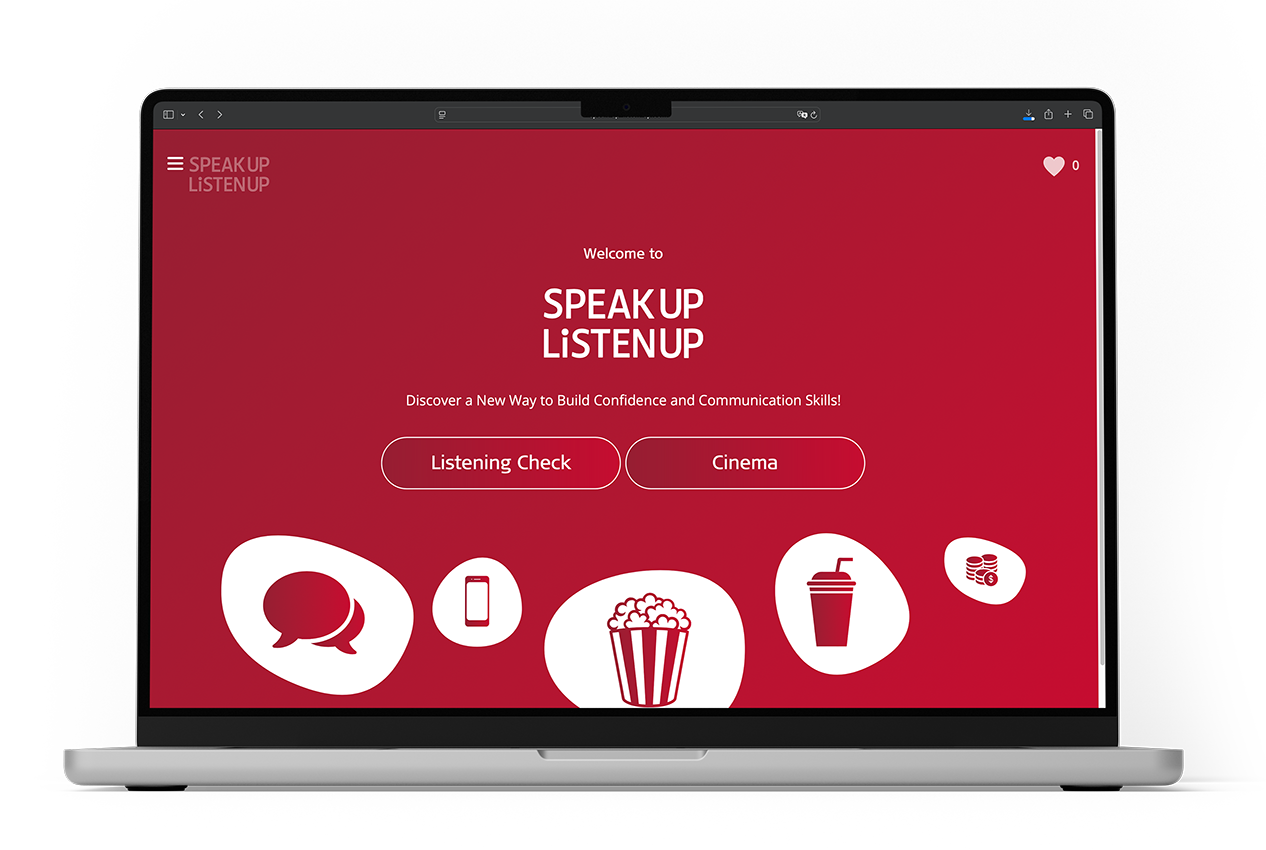
“Speak Up, Listen Up is interactive and encourages you to work on your communication skills. It helps teens’ confidence in asking other people to say things slower or louder again. What stood out most was how engaging the experience felt. The feedback like ‘Great job’ or ‘That’s not it, try it again’ helps me learn from my mistakes.”
Paula
A teenage cochlear implant recipient
Speak Up, Listen Up is specifically designed for rehabilitation professionals, audiologists, speech-language therapists, and educators who support teenagers with hearing loss who use hearing technology. It is not a standalone curriculum, but a conversation starter and a practice tool to integrate into existing therapy sessions.
Speak Up, Listen Up can be incorporated into hearing implant rehabilitation in several ways:
1. As a Conversation Starter
Use scenarios to initiate discussions about:
- Listening challenges in daily life,
- Emotional responses to communication breakdowns, and
- Strategies teens feel comfortable using.
2. To Teach and Reinforce Self-Advocacy Behaviors
Guide teens in identifying:
- What their needs are,
- What their accessibility rights are,
- How to express their needs clearly,
- When to ask for help, and
- Which strategies work best in different environments.
3. For Structured Skill Practice
Pause scenarios to:
- Analyze decisions,
- Role-play alternative responses, and
- Practice specific communication repair techniques.
4. To Support Goal Setting
It can help teens to:
- Identify personal communication goals, and
- Reflect on their real-world application of the skills.
How Speak Up, Listen Up Can Prepare Teens for Everyday Challenges
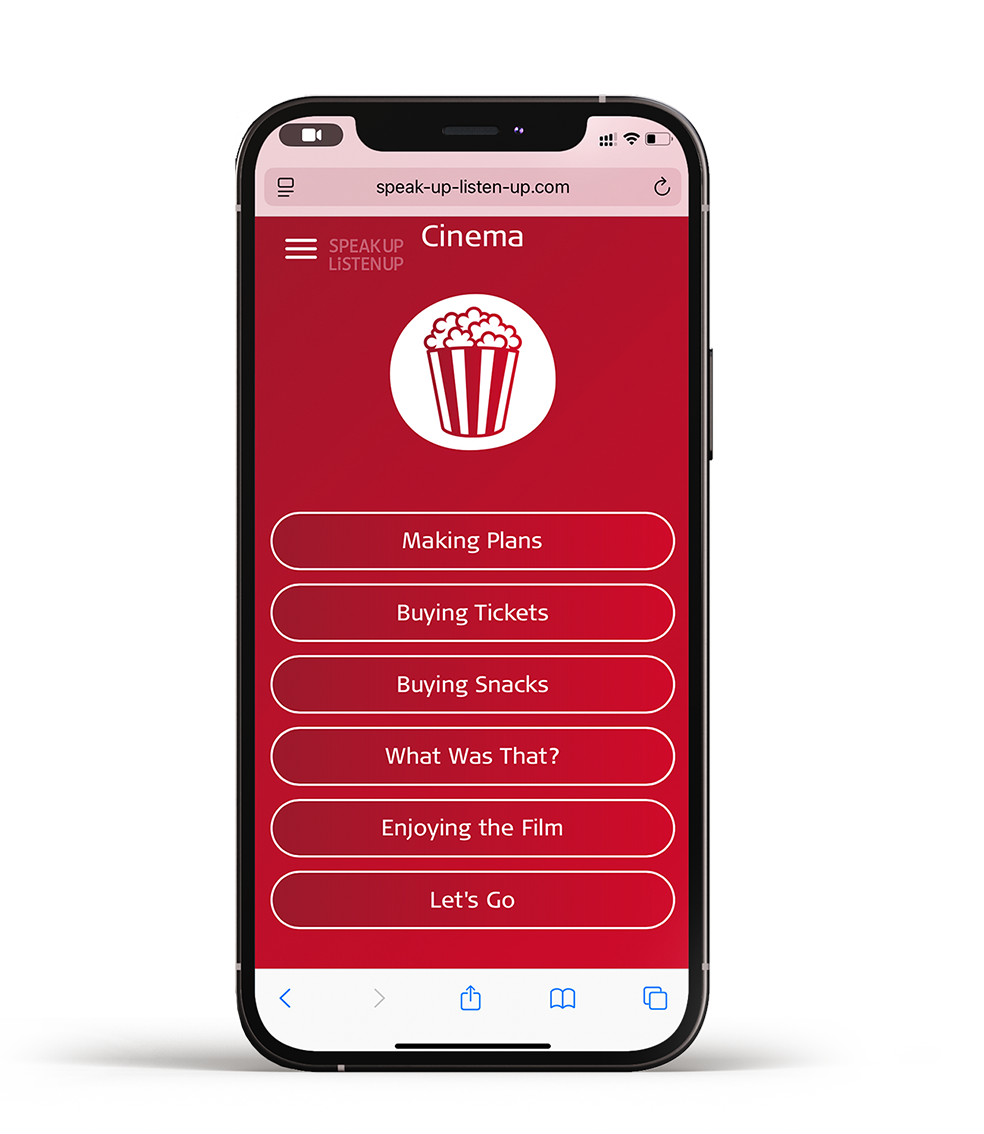
“It gives young adults more confidence. Asking questions shouldn’t make you anxious. It will encourage teens to try these strategies in real life.”
Paula
A teen cochlear implant recipient
Through Speak Up, Listen Up’s guided, story-based experiences, teens can:
- Experiment with communication strategies
- Practice self-advocacy behaviors
- Build awareness of their listening environments
- Reflect on their own communication preferences and needs
- Navigate misunderstandings with support.
The first scenario is set at a cinema, with additional real-life scenarios in development.
While teens with hearing devices can get a boost of confidence and self-esteem at a time when many may feel insecure, Speak Up, Listen Up offers rehabilitation professionals a fresh, engaging way to support them as they grow, find their voices, and learn to speak up for themselves.
References
-
[1]
Zaidman-Zait, A., & Most, T. (2020). Pragmatics and peer relationships among deaf, hard of hearing, and hearing adolescents. Pediatrics, 146(3), 298-303. https://doi.org/10.1542/peds.2020-0242J
-
[2]
de Jong, T. J., van der Schroeff, M. P., Stapersma, L., & Vroegop, J. L. (2024). A systematic review on the impact of auditory functioning and language proficiency on psychosocial difficulties in children and adolescents with hearing loss. International Journal of Audiology, 63(9), 675-685. https://doi.org/10.1080/14992027.2023.2261074
-
[3]
Punch, R., & Hyde, M. (2011). Social participation of children and adolescents with cochlear implants: A qualitative analysis of parent, teacher, and child interviews. Journal of deaf studies and deaf education, 16(4), 474-493. https://doi.org/10.1093/deafed/enr001
-
[4]
Salehi, S., Tarameshkou, M., Mirahmadi, S., Hashemnia, S., & Hassansheikhi, M. (2022). The Relationship of Pragmatic Language Competency and Self-Esteem in Hearing-Impaired Children. Journal of Arak University of Medical Sciences, 25(3), 464-473. https://doi.org/10.32598/JAMS.25.3.6900.1
-
[5]
Michael, R., & Zidan, H. M. (2018). Differences in self-advocacy among hard of hearing and typical hearing students. Research in developmental disabilities, 72, 118-127. https://doi.org/10.1016/j.ridd.2017.11.005
References
Natalie Teakle
Natalie Teakle is a Speech and Language Therapist and a Rehabilitation Manager at MED-EL. She provides training and mentoring support globally for professionals working in the field of hearing loss and hearing implants.



Was this article helpful?
Thanks for your feedback.
Sign up for newsletter below for more.
Thanks for your feedback.
Please leave your message below.
CTA Form Success Message
Send us a message
Field is required
John Doe
Field is required
name@mail.com
Field is required
What do you think?
The content on this website is for general informational purposes only and should not be taken as medical advice. Please contact your doctor or hearing specialist to learn what type of hearing solution is suitable for your specific needs. Not all products, features, or indications shown are approved in all countries.
Helen O'Donnell
July 28, 2026
Wow Natalie and Team this looks excellent ! Thanks so much to you and Med-El:) XH

Natalie Teakle
Natalie Teakle is a Speech and Language Therapist and a Rehabilitation Manager at MED-EL. She provides training and mentoring support globally for professionals working in the field of hearing loss and hearing implants.
Natalie Teakle
Natalie Teakle is a Speech and Language Therapist and a Rehabilitation Manager at MED-EL. She provides training and mentoring support globally for professionals working in the field of hearing loss and hearing implants.
Conversation
2 Comments