

Annabelle Fischer
Published Aug 17, 2026
Single-Sided Deafness in Children: Background, Effects, and Rehabilitation
For children with single-sided deafness (SSD), a lack of binaural hearing can affect speech understanding in noise, sound localization, learning, and everyday interaction. In this article, Annabelle Fischer explores the causes and consequences of SSD, compares current treatment options, and explains how cochlear implantation, when combined with targeted rehabilitation and family support, can help children unlock the benefits of hearing with both ears.

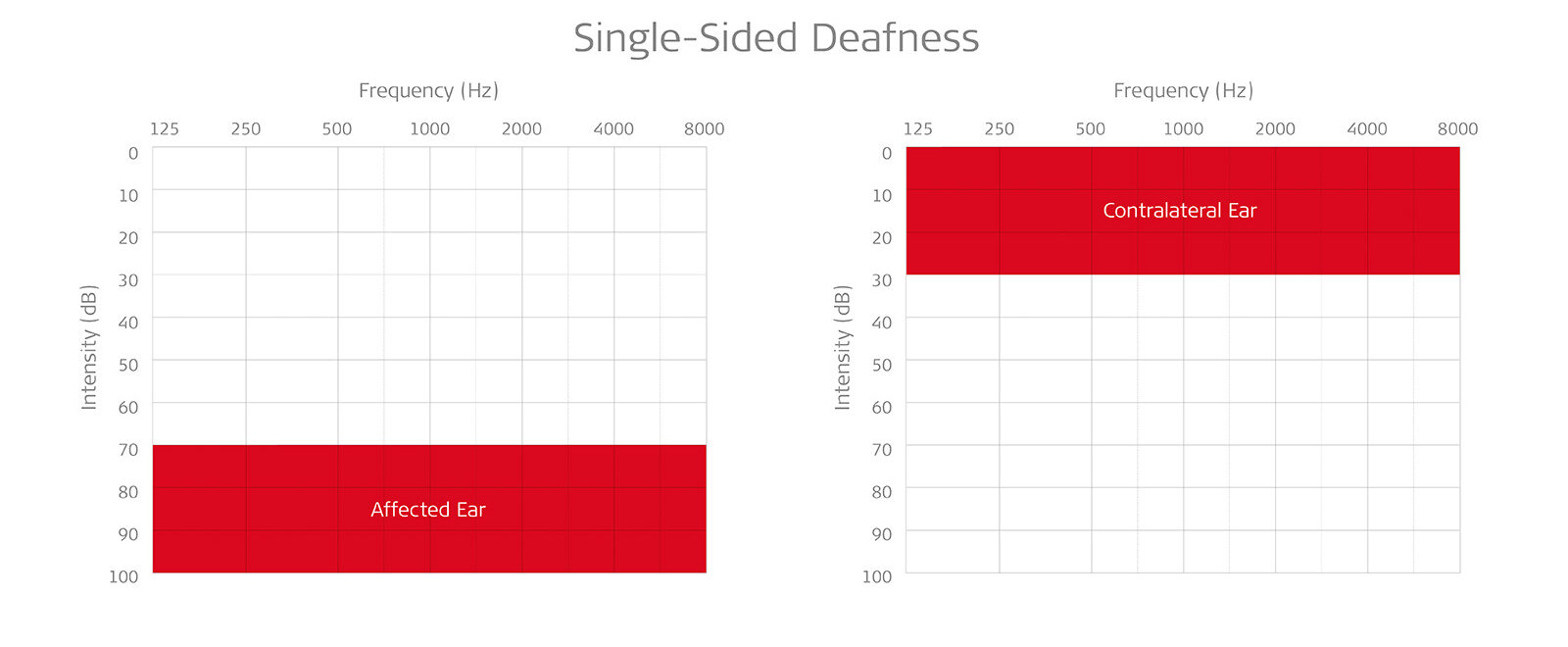
Single-sided deafness (SSD) refers to unilateral, severe-to-profound sensorineural hearing loss in which the affected ear is in the range of hearing loss ≥70 dB and the other ear is functionally well preserved. In the affected ear, benefit from conventional amplification with a hearing aid is limited.
Single-Sided Deafness vs. Asymmetrical Hearing Loss
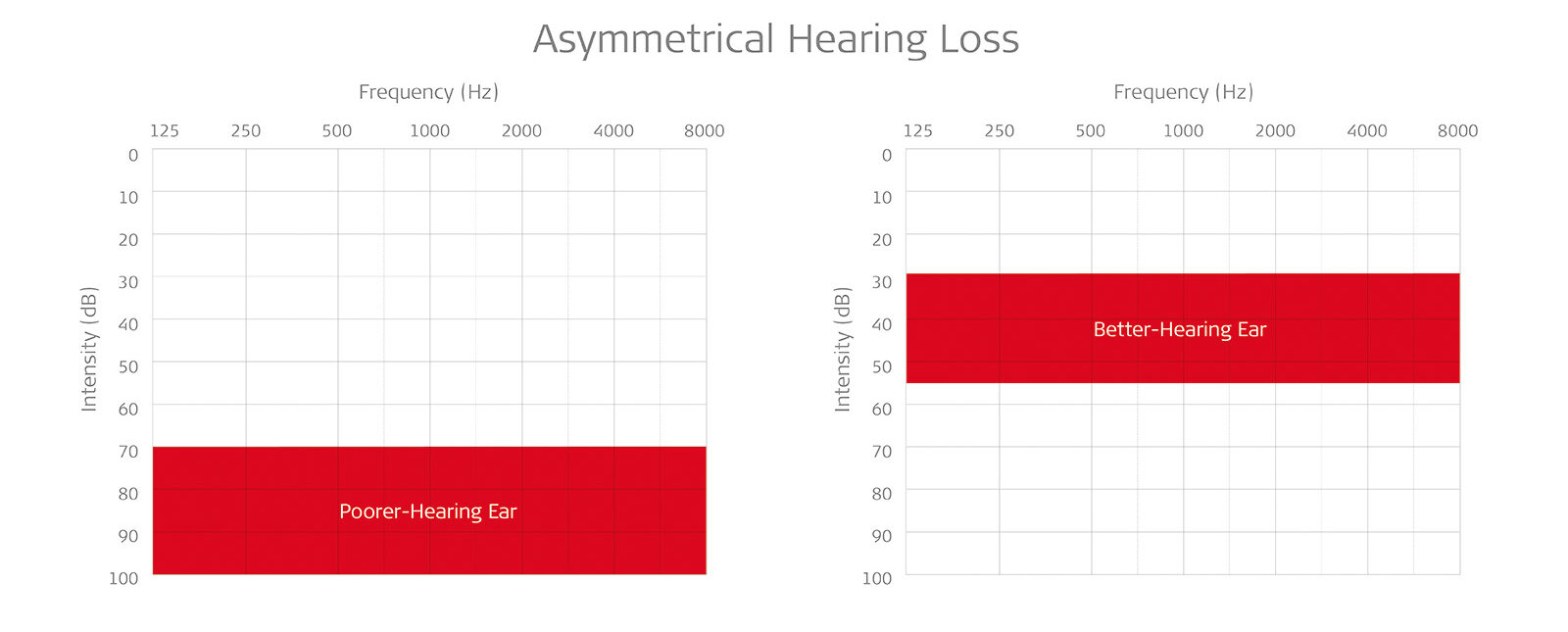
Clinically, SSD is often differentiated from asymmetrical hearing loss. Asymmetrical hearing loss (AHL) is characterized by severe-to-profound hearing loss in one ear (>=70dB HL) and mild-to-moderate hearing loss in the other ear (30-55 dB HL).
Asymmetrical hearing loss is present when the degree of hearing loss differs between ears. The difference in thresholds can be ≥15 dB or ≥40 dB, depending on the definition.
Prevalence
The prevalence of SSD varies according to age. Around 1 in 1,000 newborns is diagnosed with unilateral deafness. By the time children start school, the prevalence of unilateral hearing loss increases to around 3-6% in many populations.[1] This increase can be explained by late-onset forms that have not yet been detected during newborn hearing screening. In general, it can be observed that universal hearing screening in newborns and the introduction of comprehensive early diagnosis has significantly improved the detection rate, thus enabling early counseling and treatment planning.
Etiology
The etiology differs according to the time of onset (congenital vs. postlingual). Based on the data from Usami et al., aplasia or hypoplasia of the cochlear nerve are among the most common causes of congenital SSD, followed by congenital cytomegalovirus (CMV) infections and mumps.[2] Malformations of the inner ear also occur frequently. In around 20 % of cases, the etiology remains unknown.
Overall, for congenital AHL, a similar trend can be seen: CMV infections and aplasia or hypoplasia of the cochlear nerve are the most common identifiable causes, while a considerable proportion of cases (around 43%) cannot be attributed to a clear cause.
In postlingually acquired SSD and AHL, however, other causes appear. Idiopathic hearing loss and cases of unclear etiology are the most common, followed by chronic otitis media, cholesteatoma, and vestibular schwannomas.
Effects on Daily Life
Although a functional contralateral ear compensates for many everyday situations in quiet, children with SSD show clear disadvantages in complex hearing situations, particularly in speech comprehension in background noise and in spatial or directional hearing (sound localization).[3] These deficits can be explained neurophysiologically by the loss of binaural mechanisms, in particular the loss of the binaural squelch effect, loudness summation, and the head-shadow effect.
In affected children, such auditory impairments lead to increased listening effort,[4] fatigue, occasional headaches, and psychosocial and educational consequences. These can include an increased rate of additional support needs, poorer school performance, and an increased risk of class repetition.[5]
Lieu et al. found that the “invisibility” of unilateral hearing loss for educators and their lack of knowledge about unilateral deafness can lead to poorer academic performance than in the comparison group of children with moderate hearing loss who take advantage of special services.[6]
Speech Development and Articulation
Systematic studies show that the receptive skills of many children with SSD can be within the normal range, but there are indications of deficits in morphological-syntactic areas, expressive vocabulary, and in articulation (e.g. influences on fricatives and consonant connections).[7] These changes are multifactorial: on the one hand, auditory, due to reduced acoustic input, and on the other hand, cumulative, due to the effects of the listening and cognitive effort required to focus[8] and reduced participation in language-rich interactions.
Treatment Options for SSD
Often SSD is left untreated. In many cases, however, this decision is not made consciously but is the result of a lack of information about available rehabilitative treatment options.
CROS hearing systems and bone conduction hearing systems do not enable true binaural hearing; and therefore, do not restore binaural hearing functions. However, bone conduction hearing systems often achieve better sound transmission compared to CROS systems. Nevertheless, this is also a fitting without binaural signal processing, as the sound is still perceived monaurally.[9]
The only currently available option that and associated auditory abilities is the cochlear implant. It requires surgery and a subsequent period of adaptation and rehabilitation but offers the potential to restore binaural hearing benefits such as directional hearing, the squelch effect, and improved speech understanding in noise.[12]
Various studies confirm the importance of early diagnosis and counseling in order to establish the best basis for bilateral hearing.[10] Rauch et al. describe an optimal time window in congenital SSD around 12 months of age, with diagnosis ideally established by age 3. However, more recent evidence suggests this should not be read as a strict cutoff.
Park et al. found that children implanted later than this early window can still derive meaningful benefit from a CI, with outcomes shaped not only by age at implantation but also by factors such as device use (hearing hour percentage), duration of deafness, and the quality of family support and rehabilitation.[11]
What remains a robust and consistent finding across the literature is that, in congenital SSD, earlier implantation is associated with better outcomes.
Rehabilitation Therapy & Aftercare for SSD Children With a Cochlear Implant
The implementation of a CI for children with SSD requires more than just surgical intervention: Systematic preparation (expectation management, motivation of the child and caregivers), close audiological fitting, targeted hearing and speech training, particularly in the first few months after implantation, and accompanying psychosocial support for the child and the environment are fundamental.
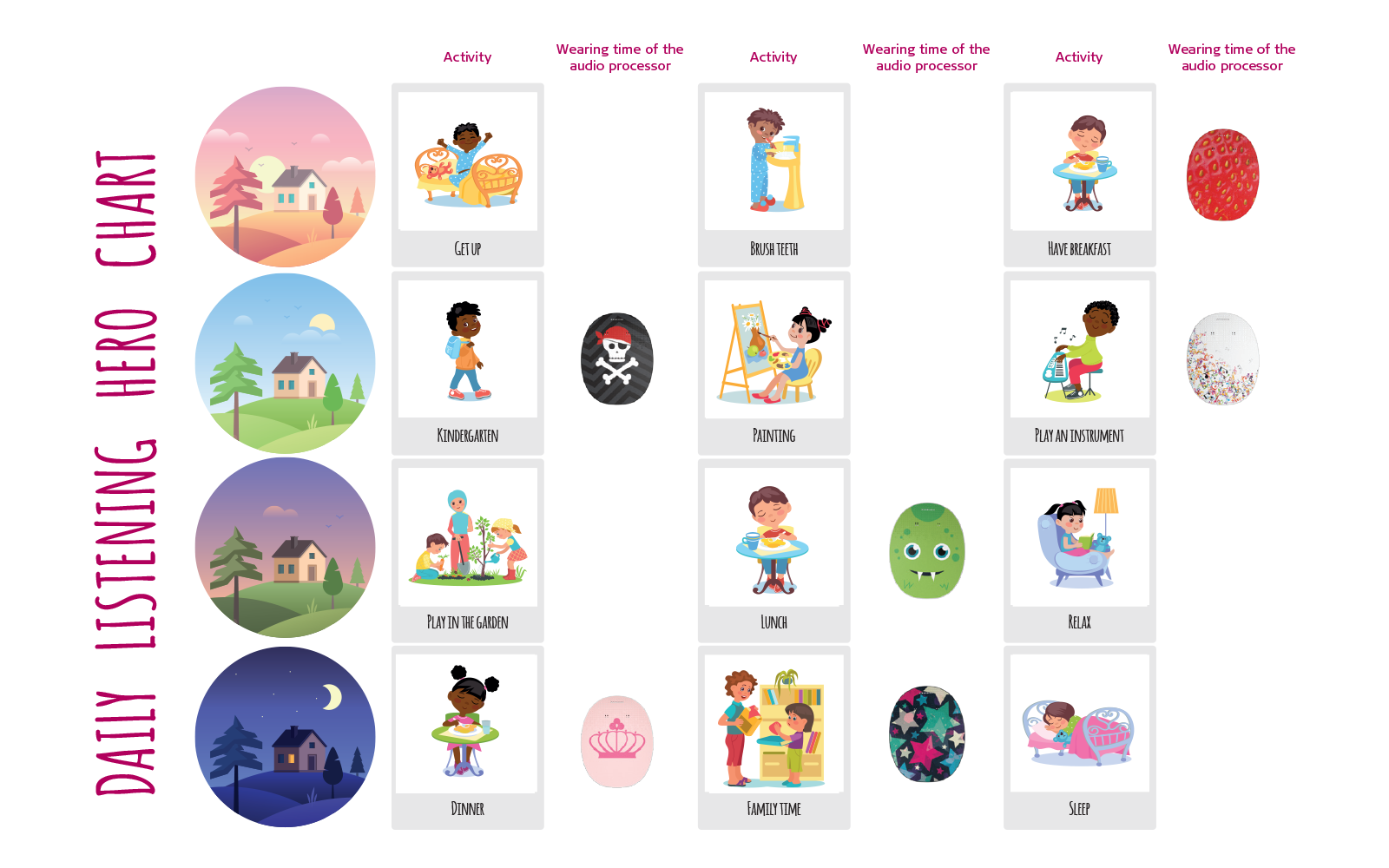
Measurable outcome parameters should be recorded in a standardized manner in order to assess the course and success of therapy. The implementation of practical tools has proven to be helpful in increasing adherence and motivation. For example, the Daily Listening Hero Chart.
In children with SSD, the contralateral ear will naturally dominate during listening tasks unless deliberate steps are taken to prevent this.
To make sure listening exercises train the CI side, rather than letting the normal-hearing ear do the work, the contralateral ear needs to be either bypassed or masked. There are two ways to achieve this:
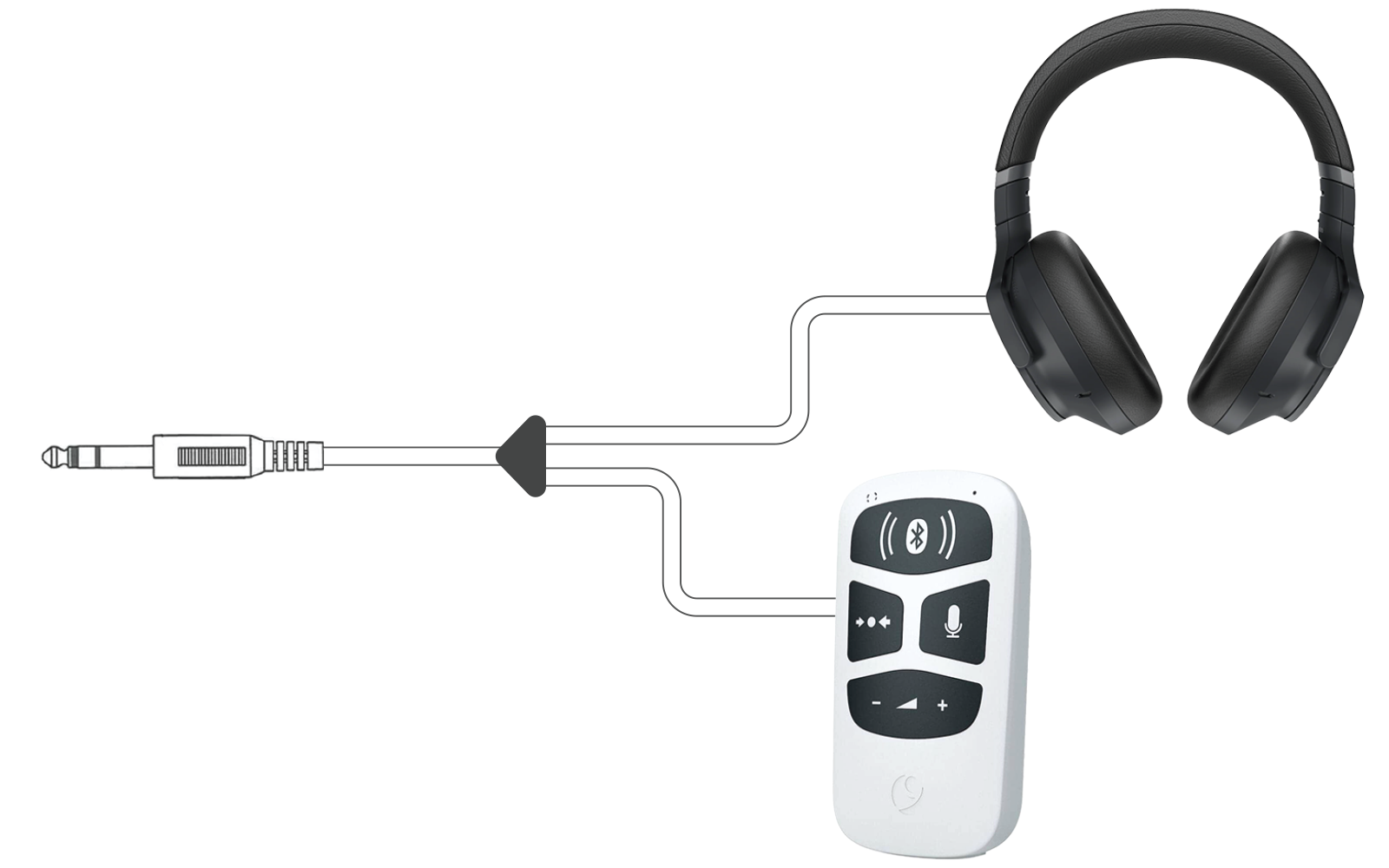
Direct Audio Input (DAI) routes sound, speech, or other audio straight into the audio processor from a device such as a tablet or computer. This is the more reliable option, since it ensures the CI side receives input exclusively.
It is recommended to use an audio splitter so the therapist (or another listener) can monitor the same signal. If the child can overhear the source audio through the therapist’s headphones, the better-hearing ear must also be masked (see below).
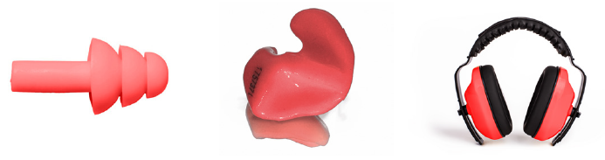
Free-Field Technique (FFT) plays sound through loudspeakers in the room, while the contralateral ear is physically masked, typically with a custom earmold from an audiologist or a simple earplug, ideally combined with hearing protection over the ear.
To confirm the masking is effective, remove the coil and test with single words to check that nothing is understood through the masked ear.
To make sure an exercise has been understood, it can help to first demonstrate and explain it with both ears together, then repeat it CI-only.
Both methods work for most exercises and can be mixed depending on what’s available, the child’s age, and what suits the activity. Some exercises also deliberately combine the unaided ear and the CI ear to train binaural integration once unilateral skills are established. Those can be localization, dichotic hearing, and hearing in noisy environments.
Working With the Parents & Caregivers of SSD Children
Parents spend far more time with the child than any therapist does, so the best outcomes come from coaching caregivers well: giving clear guidance and consistent positive feedback rather than providing exercises in isolation.
Involve all caregivers and frame their role accurately. Even when they create structured listening situations at home, they shouldn’t be acting as teachers. They’re part of a “discovery team,” exploring the new experience of hearing alongside the child.
References
-
[1]
Ross, D. S., Visser, S. N., Holstrum, W. J., Qin, T., & Kenneson, A. (2010). Highly variable population-based prevalence rates of unilateral hearing loss after the application of common case definitions. Ear and Hearing, 31(1), 126–133. https://doi.org/10.1097/AUD.0b013e3181bb69db
-
[2]
Usami, S.-I., Kitoh, R., Moteki, H., Nishio, S.-Y., Kitano, T., Kobayashi, M., Shinagawa, J., Yokota, Y., Sugiyama, K., & Watanabe, K. (2017). Etiology of single-sided deafness and asymmetrical hearing loss. Acta Oto-Laryngologica, 137(Suppl. 565), S2–S7. https://doi.org/10.1080/00016489.2017.1300321
-
[3]
Van Wieringen, A., Boudewyns, A., Sangen, A., Wouters, J., & Desloovere, C. (2019). Unilateral congenital hearing loss in children: Challenges and potentials. Hearing Research, 372, 29–41. https://doi.org/10.1016/j.heares.2018.01.010
-
[4]
Weißgerber, T. (2021). Listening effort in SSD with and without CI. Schnecke, 111, 26
-
[5]
Lieu, J. E. (2004). Speech-language and educational consequences of unilateral hearing loss in children. Archives of Otolaryngology–Head & Neck Surgery, 130(5), 524–530. https://doi.org/10.1001/archotol.130.5.524
-
[6]
Lieu, J. E., Tye-Murray, N., & Fu, Q. (2012). Longitudinal study of children with unilateral hearing loss. The Laryngoscope, 122(9), 2088–2095. https://doi.org/10.1002/lary.23454
-
[7]
Sangen, A., Royackers, L., Desloovere, C., Wouters, J., & van Wieringen, A. (2017). Single-sided deafness affects language and auditory development: A case-control study. Clinical Otolaryngology, 42(5), 979–987. https://doi.org/10.1111/coa.12826
-
[8]
Santopietro, G., Fancello, V., Fancello, G., Bianchini, C., Pelucchi, S., & Ciorba, A. (2024). Cochlear implantation in children affected by single-sided deafness: A comprehensive review. Audiology Research, 14(1), 77–85. https://doi.org/10.3390/audiolres14010007
-
[9]
Chandrasekar, B., Hogg, E. S., Patefield, A., Strachan, L., & Sharma, S. D. (2023). Hearing outcomes in children with single sided deafness: Our experience at a tertiary paediatric otorhinolaryngology unit. International Journal of Pediatric Otorhinolaryngology, 167, Article 111296. https://doi.org/10.1016/j.ijporl.2022.111296
-
[10]
Rauch, A. K., Arndt, S., Aschendorff, A., Beck, R., Speck, I., Ketterer, M. C., Jakob, T. F., & Hassepass, F. (2021). Long-term results of cochlear implantation in children with congenital single-sided deafness. European Archives of Oto-Rhino-Laryngology, 278(9), 3245–3255. https://doi.org/10.1007/s00405-020-06409-6
-
[11]
Park, L. R., Gagnon, E. B., & Dillon, M. T. (2023). Factors that influence outcomes and device use for pediatric cochlear implant recipients with unilateral hearing loss. Frontiers in Human Neuroscience, 17, Article 1141065. https://doi.org/10.3389/fnhum.2023.1141065
-
[12]
Lorens, A., Obrycka, A., Ratuszniak, A., Skarzynski, P. H., & Skarzynski, H. (2026). Assessment of benefits of cochlear implantation in children with single-sided deafness. Ear & Hearing, 47(1), 20-30. https://doi.org/10.1097/aud.0000000000001721
References
Annabelle Fischer
Annabelle Fischer studied at Heidelberg University and is the owner and director of the Therapy Center for Hearing and Communication – Praxis Hanik in Munich. She started working there as a therapist in 2014 and has been focusing on evidence-based therapy approaches ever since. For the past three years, her main focus has been on rehabilitation for children and adults with single-sided deafness. She is a lecturer in the field of speech pathology at Ludwig Maximilian University of Munich (LMU), Germany. She is co-author of "Mikas Zauberohr" and combines her scientific work with hands-on therapeutic practice. Currently, she is developing a therapy concept for adults after cochlear implantation.


Was this article helpful?
Thanks for your feedback.
Sign up for newsletter below for more.
Thanks for your feedback.
Please leave your message below.
CTA Form Success Message
Send us a message
Field is required
John Doe
Field is required
name@mail.com
Field is required
What do you think?
The content on this website is for general informational purposes only and should not be taken as medical advice. Please contact your doctor or hearing specialist to learn what type of hearing solution is suitable for your specific needs. Not all products, features, or indications shown are approved in all countries.
Annabelle Fischer
Annabelle Fischer studied at Heidelberg University and is the owner and director of the Therapy Center for Hearing and Communication – Praxis Hanik in Munich. She started working there as a therapist in 2014 and has been focusing on evidence-based therapy approaches ever since. For the past three years, her main focus has been on rehabilitation for children and adults with single-sided deafness. She is a lecturer in the field of speech pathology at Ludwig Maximilian University of Munich (LMU), Germany. She is co-author of "Mikas Zauberohr" and combines her scientific work with hands-on therapeutic practice. Currently, she is developing a therapy concept for adults after cochlear implantation.