

Nandini Dave Maingi
Published Jul 15, 2026
Anatomy-Based Fitting: A Love Letter From an Audiologist
Nandini is an audiologist—with hearing loss. She recently took the leap and got a cochlear implant. Now she can speak from personal experience about what hearing with a MED-EL cochlear implant is like. Read on to learn what a huge difference anatomy-based fitting can make.
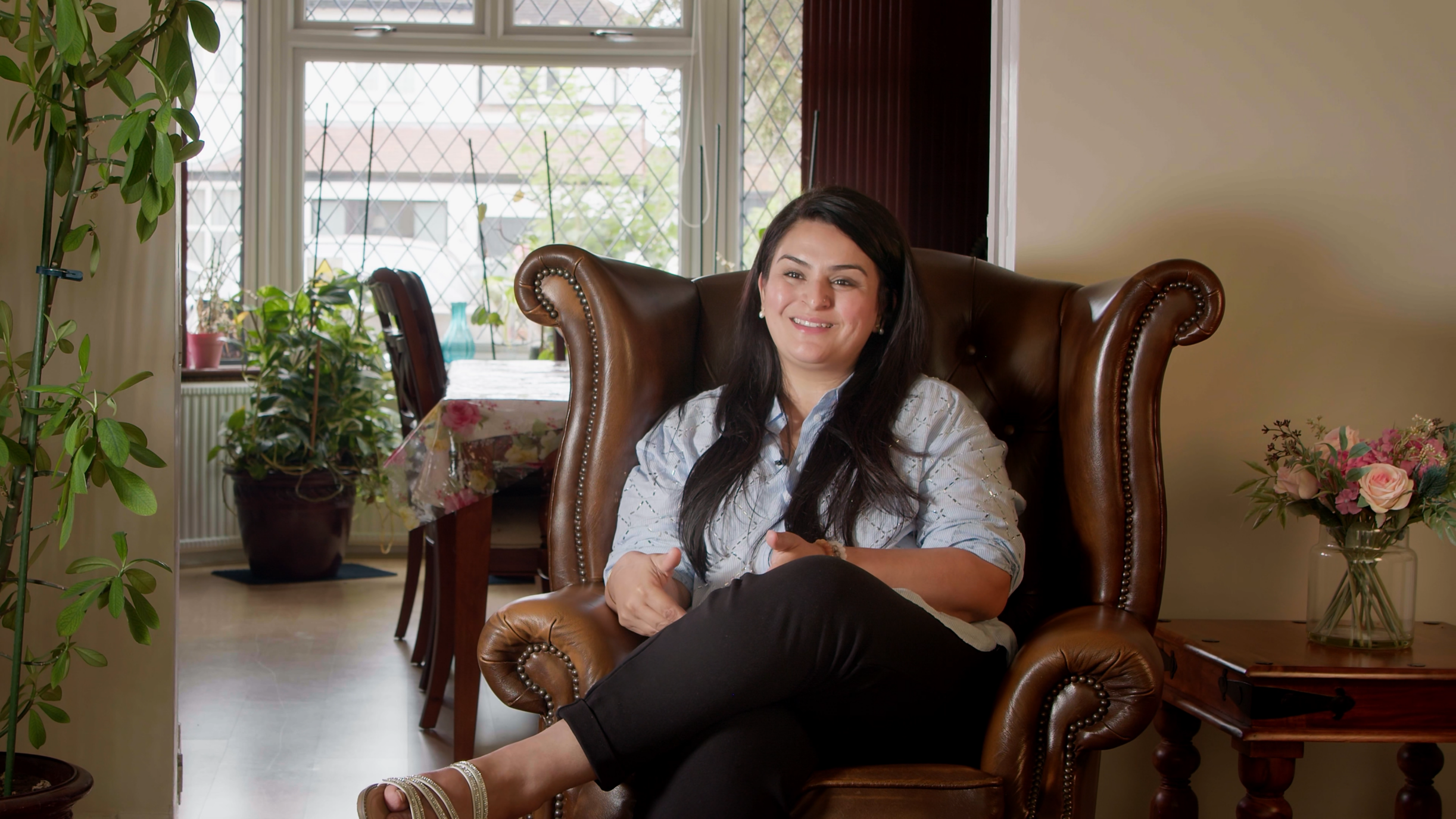
I’ve lived with hearing loss since childhood. My first hearing aids came at age four. After years of a love-hate relationship with them, I found my own calling to be an audiologist. I wore my hearing aids all the time by then. At 22, fresh from my Master’s in Audiological Science, I set out determined to help both children and adults with hearing loss—my people.
The clinical setting soon led me to a university teaching post and eventually to my final home: MED-EL, where I’ve been since 2011. As my own hearing declined, the call of the cochlear implant grew louder and impossible to ignore. It was time for me, too, to take the step. Despite having bilateral severe-to-profound hearing loss, I chose to have one implant first, because even as an audiologist, I was uncertain.
As an audiologist, I know our long-held script, the same script repeated world over by audiologists at switch-on: No matter the brand, the brain will take time to adapt to the “new sound.” What if I tell you now that that script is no longer entirely true?
Nandini
Audiologist & MED-EL CI User
For patients, activation is the start of a new chapter: the miracle of cochlear implants. I have counselled through many a switch-on, and I know firsthand the anticipation of that first sound. The sound comes through, but it’s robotic, cartoonish, even comical—like a helium‑filled “Mickey Mouse.” That moment can be frightening. Patients wonder (and I know I did when I became a patient): How will the next six months sound while I get used to this?
For me, it felt like a steep climb up rough terrain. I knew I had to make the journey, but the prospect was daunting.
Now imagine a world where that initial sound is smoother, more natural, less synthetic. With anatomy-based fitting, unique to MED-EL, that’s exactly what I experienced. My climb looked different. Yes, it was a new sound, but it didn’t leave me nervous. I walked out of that appointment smiling, confident that the next six months were totally achievable.
The “robotic” quality comes from a mismatch between electrode contact position and its corresponding frequency along the cochlea. The greater the mismatch, the more unnatural the sound.
MED-EL has long emphasized full cochlear coverage as essential to natural sound delivery. Their electrode portfolio reflects this: varied lengths of arrays up to 34 mm to suit different cochlear duct lengths. In my case, OTOPLAN was used to analyze my scans and measure the size of my cochlea, and based on this analysis, a FLEX28 electrode array was chosen. In my professional practice, I’ve seen how the right array length can make or break the patient’s early listening experience.
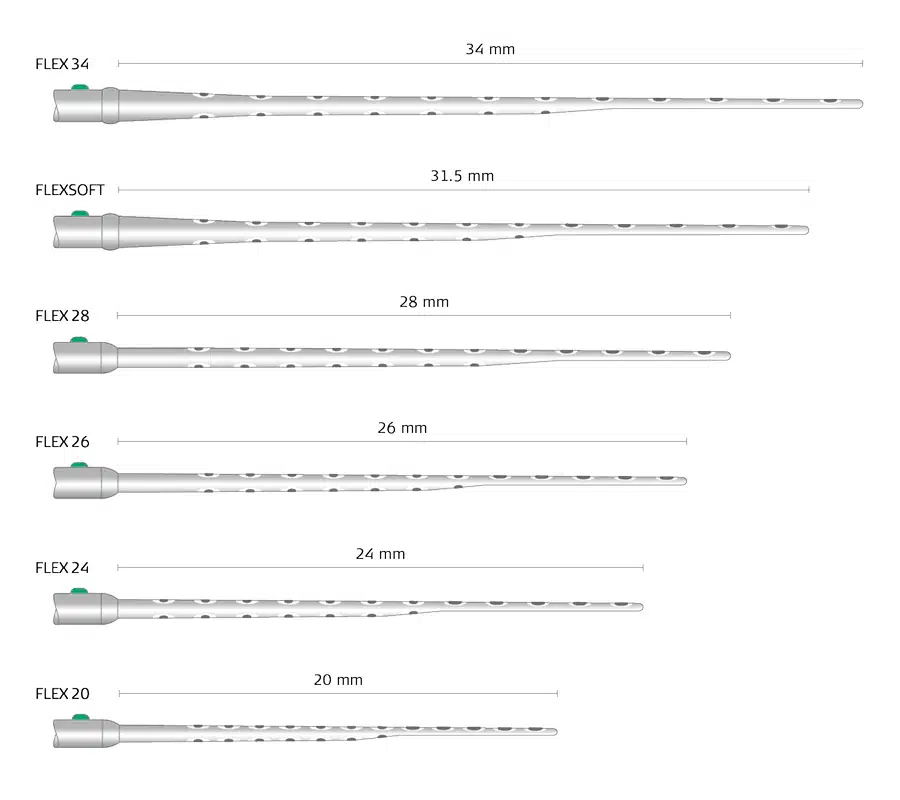
My surgeon aimed for deep insertion, but my delicate cochlear anatomy had other ideas. The electrode sat at slightly less than full coverage. Audiologists recognize this as one of the most critical determinants of sound quality and it’s something I’ve explained countless times in clinic, but I worried whether anatomy-based fitting would really deliver.
Postoperative imaging was fed back into OTOPLAN, which showed the location of each contact and its corresponding frequency. That data was fed into the MAESTRO fitting software, where the FS4 coding strategy was applied.
At switch on (FS4), my audiologist’s voice sounded high pitched, and my own voice was hollow, like speaking through a vacuum. I’ve witnessed other patients panic at that hollow, robotic voice, and I felt it myself. I panicked internally while maintaining my smile: Was this my new normal?
After 30 minutes of conversation and careful level setting, anatomy-based fitting (also called ABF) was applied. This was always the plan for me—I wanted to “feel” FS4 and then see if I could “feel” the difference with ABF.
The change was immediate. My audiologist sounded like himself again. My own voice normalized. The tinny edge was gone.
Anatomy-based fitting compensates for post‑surgical mismatch. It allows surgeons and audiologists to work in synchrony, ensuring smoother, more natural sound delivery.
For patients, this means carrying a sound that feels relatable—something they can work with and something they know will improve with time. That gift is enormous when you are deaf and anxious about the unknown.
This dual perspective as an audiologist and cochlear implant recipient gives me confidence when I say that anatomy-based fitting changes the game: It works. Don’t just take my word for it—ask patients directly, and they will tell they feel a real difference before and after ABF.
I can say with conviction: Anatomy-based fitting changes the whole experience. It transforms fear into confidence, robotic sound into natural sound, and uncertainty into hope.
During a conference, when audiologists and researchers questioned if ABF worked, this was my response:
In hindsight, receiving my first implant went smooth and easy, and there was nothing I needed to be anxious about. But that’s the thing with hindsight: It’s always perfect. Will I go for my second implant? I am 100% sure I will! The question is: How soon!?
Providing closest to natural hearing with cochlear implant technology is at the heart of what MED-EL does. By establishing a partnership between surgeons, audiologists, and patients, it is possible to provide individualized cochlear implant care.
* Nandini is a MED-EL employee. Her appearance forms part of company marketing reflecting her personal journey with hearing loss. The content does not represent clinical advice. For questions about hearing loss or cochlear implantation, please consult your healthcare professional.
References
Nandini Dave Maingi
Nandini has been an audiologist for 25 years. She worked for MED-EL India for over 15 years and began working for MED-EL UK as a Hearing Journey Support Specialist in October of 2025.



Was this article helpful?
Thanks for your feedback.
Sign up for newsletter below for more.
Thanks for your feedback.
Please leave your message below.
CTA Form Success Message
Send us a message
Field is required
John Doe
Field is required
name@mail.com
Field is required
What do you think?
The content on this website is for general informational purposes only and should not be taken as medical advice. Please contact your doctor or hearing specialist to learn what type of hearing solution is suitable for your specific needs. Not all products, features, or indications shown are approved in all countries.
Nandini Dave Maingi
Nandini has been an audiologist for 25 years. She worked for MED-EL India for over 15 years and began working for MED-EL UK as a Hearing Journey Support Specialist in October of 2025.