



Daniel Polterauer-Neuling, Alice Auinger, Carlos Augusto Alderete, Giacomo Mandruzzato
Published Nov 10, 2026
PromStim: A Tool to Help Determine Cochlear Implant Candidacy in Unclear Cases
When standard hearing tests cannot confirm whether the auditory nerve is functional, objective electrical measurements become essential. MED-EL’s PromStim System can help clinicians assess auditory nerve excitability and support cochlear implant decision-making in complex cases.

The Challenge: When Acoustic Testing Is Not Enough
The integrity and excitability of the auditory nerve are essential prerequisites for successful benefit from a cochlear implant in patients affected by hearing loss. However, in recent years, audiology departments increasingly encounter complex cases in which the presence or excitability of the auditory nerve cannot be clearly determined.
“Determining a patient's candidacy for a cochlear implant (CI) is a foundational part of my work as an CI technology manager. While many cases are straightforward, we frequently encounter patients who show no response to even the most powerful acoustic stimuli, leaving a critical question unanswered: Is the auditory nerve functional? To answer this, we must turn to objective, electrical measurements.”
Daniel Polterauer Neuling, PhD
CI Technology Manager & Principal Investigator, Department of Otorhinolaryngology, Ludwig Maximilian University of Munich (LMU)
The Need for Reliable Objective Measures to Help Assess Cochlear Implant Candidacy
In the past, preoperative electrical stimulation of the middle ear was used to obtain subjective patient feedback in order to identify cochlear implant candidates. However, this method proved to be unreliable, often producing false-positive or false-negative results and being unsuitable for small children.
Today, objective electrophysiological measurements play an essential role in modern cochlear implant care. They allow clinicians and researchers to assess auditory nerve responses to electrical stimulation and provide valuable information when behavioral testing is inconclusive. As audiological assessment continues to evolve, reliable and flexible tools for these measurements are becoming increasingly important. The PromStim system was developed to meet this need.
Introducing: The PromStim System to Evaluate Neural Responses to Electrical Stimulation
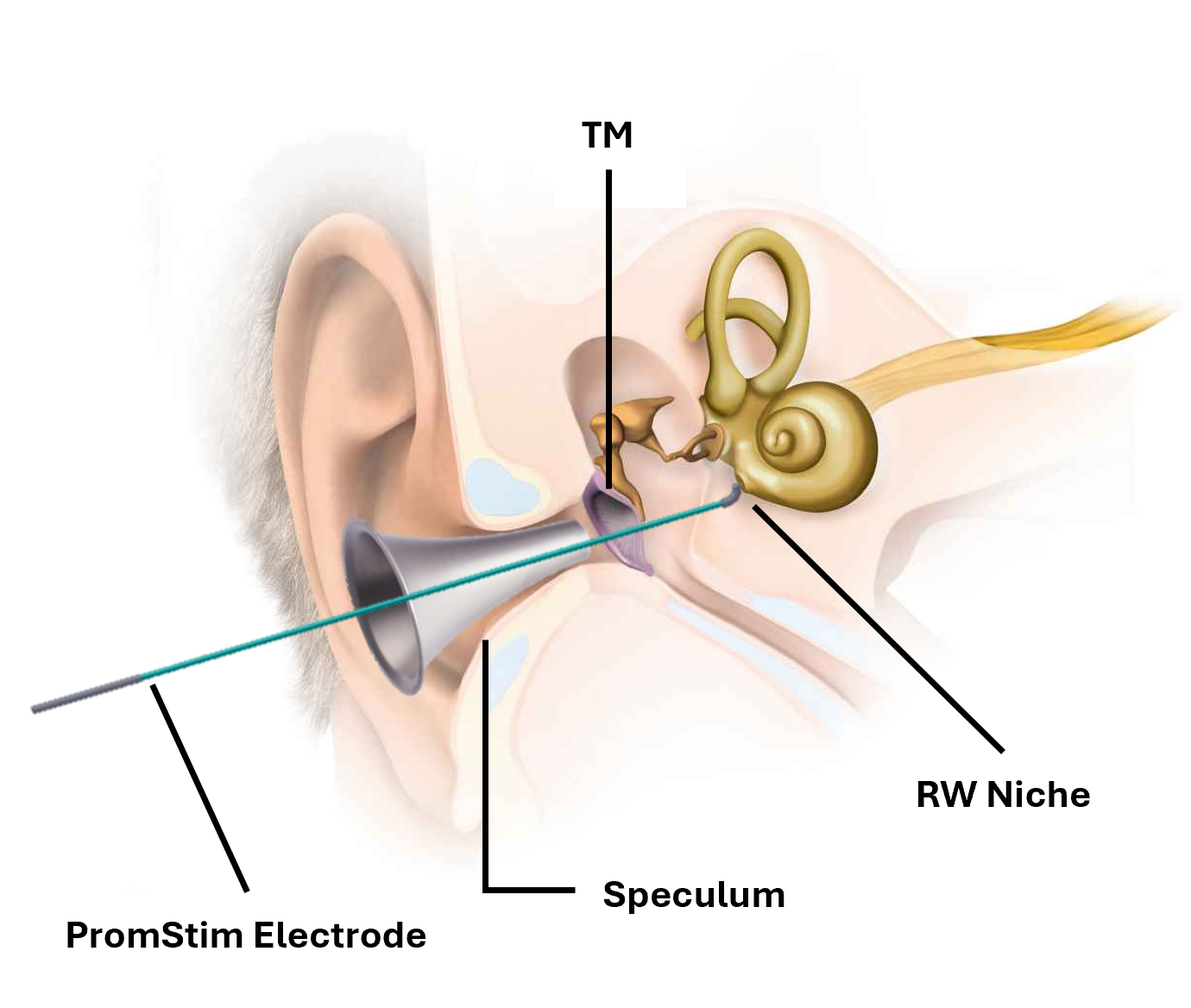
Figure 1. PromStim electrode placement near the promontory or on the RW niche.
The PromStim System has been designed to deliver controlled electrical stimulation preoperatively to the round window niche and enable the recording of electrically evoked auditory responses, such as electrically evoked auditory brainstem responses (EABR). Using the golf club‑shaped PromStim Electrode and electrical stimulation delivered by the MED‑EL Stimulator Box controlled through the clinical software MAESTRO, the system supports clinicians and researchers in evaluating neural responses to cochlear implant stimulation.
Dr. Polterauer‑Neuling’s team and Prof. Müller at the LMU Munich have accumulated over more than a decade clinical experience using the PromStim test in more than 50 patients, which has demonstrated promising results. In one of the latest scientific works on the topic, among 19 patients tested in local anesthesia, all 14 patients with positive preoperative EABR responses (LA-TT‑EABR) (see Figure 2) using the PromStim System underwent cochlear implantation, and all of them showed improved speech understanding with their cochlear implant after one year.[1]
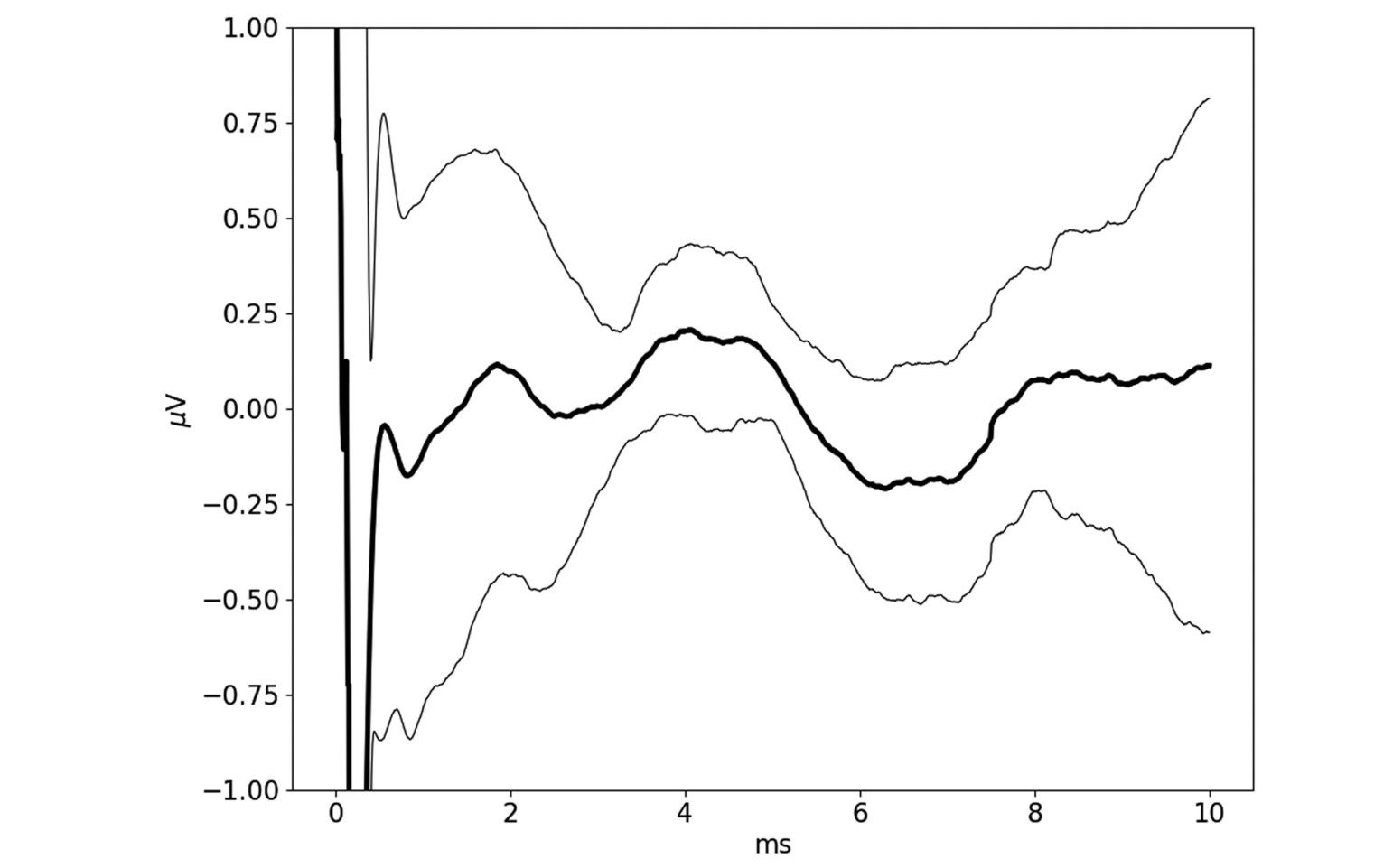
Figure 2. Source: Polterauer et al., 2022. The total mean of N=14 positive response waveforms evoked by PromStim TT-EABR under local anesthesia. For more information, go to https://doi.org/10.1080/14992027.2022.2114024
Versatility of the PromStim System in Clinical Practice: Pediatrics & Adults
Dr. Carlos Alderete, ENT specialist in cochlear implantation in La Plata, Argentina, has integrated the system into his clinical practice for both children and adults. Preoperative EABR measurements were performed in six children (under general anesthesia) and fourteen adults (under local anesthesia) presenting with conditions such as idiopathic congenital single-sided deafness (SSD), cochlear nerve hypoplasia, skull bone fracture, sudden hearing loss, and tinnitus.
At Dr. Alderete’s clinic, patients with a positive response were successfully implanted with MED-EL cochlear implants, and all reported significant improvements in their quality of life due to the hearing provided by the implant. Patients who did not show a response or declined cochlear implantation were fitted with the MED-EL BONEBRIDGE active bone conduction implant to route auditory input to the contralateral ear, a process that resulted in high levels of patient satisfaction.
"The PromStim System is extremely useful for identifying patients with single-side deafness (SSD) who are candidates for cochlear implantation and in whom the auditory nerve response to electrical stimulation needs to be assessed. It is effective in both children and adults."
Dr. Carlos Augusto Alderete
ENT Specialist & Director of the Cochlear Implantation Center, H.I.G.A.R. Rossi Hospital in La Plata, Argentina
Evaluating Cochlear Implant Candidacy: From Post-Meningitis Deafness to Vestibular Schwannoma Resection Patients
“In complex CI candidacy cases, particularly when acoustic tests fail or in cases like post-meningitis deafness, trans-tympanic electrical testing is an indispensable tool. It provides objective, physiological proof of the auditory nerve's excitability, which is crucial information for both the clinician and the patient when deciding to proceed with implantation […] This helps ensure that a cochlear implant is a viable option and reduces the likelihood of implanting a non-stimulable ear.”
Daniel Polterauer Neuling, PhD
CI Technology Manager & Principal Investigator, Department of Otorhinolaryngology, Ludwig Maximilian University of Munich (LMU)
Specialized Applications: Managing Complex Surgical Cases With PromStim
Beyond standard candidacy, PromStim System is proving invaluable in highly specialized surgical planning. At the Vienna General Hospital, Dr. Auinger (Department of Otorhinolaryngology, AKH Vienna) routinely uses the system for patients scheduled for vestibular schwannoma resection. This allows for the evaluation of whether simultaneous cochlear implantation is feasible during tumor surgery.
“The information obtained supports surgical planning and facilitates comprehensive patient counseling, particularly regarding the likelihood of successful simultaneous cochlear implantation [during tumor removal] and the expected postoperative hearing rehabilitation. Consequently, therapeutic options can be evaluated more realistically, and patient expectations can be managed more effectively.”
Dr. Alice Auinger
ENT Specialist, Department of Otorhinolaryngology, Head and Neck Surgery, Vienna General Hospital (AKH Vienna)
The PromStim System at a Glance
- The PromStim System is a CE‑marked product.
- The PromStim System consists of the following components:
- The sterile, single‑use PromStim Electrode (available in short or long versions)
- Connecting cables
- The MED-EL Stimulator Box
- The PromStim System is controlled via the MAESTRO clinical software and provides an integrated solution for preoperative electrical stimulation of the auditory pathway.
PromStim: A Valuable Tool to Assist in Evaluating Cochlear Implant Candidacy
By integrating preoperative EABR results obtained with the PromStim System with other audiological assessments, clinicians can achieve a more comprehensive evaluation of auditory pathway excitability.
“These established methods remain a critical part of the diagnostic tool kit for navigating the most challenging cochlear implant candidacy decisions.”
Daniel Polterauer Neuling, PhD
CI Technology Manager & Principal Investigator, Department of Otorhinolaryngology, Ludwig Maximilian University of Munich (LMU)
Views expressed are those of our guest authors. Hearing professionals and clinicians should always refer to the relevant MED-EL surgical guides and instructions for use for their country. Outcomes and results may vary.
Not all products, features, services, or indications shown are available in all areas. Contact your local MED-EL representative for more information.
References
-
[1]
Polterauer, D., Mandruzzato, G., Neuling, M., Polak, M., Müller, J., & Hempel, J. M. (2023). Evaluation of auditory pathway excitability using a pre-operative trans-tympanic electrically evoked auditory brainstem response under local anesthesia in cochlear implant candidates. International Journal of Audiology, 62(12), 1176–1186. https://doi.org/10.1080/14992027.2022.2114024
-
[2]
Dutt, S. N., & Kumar, A. (2019). The methodology and electro-physiological classification of pre-operative trans-tympanic electrically-evoked auditory brainstem response (TT-EABR). Indian Journal of Otolaryngology and Head & Neck Surgery, 71(1), 1-4. https://doi.org/10.1007/s12070-019-01585-2
-
[3]
Dutt, S. N., Kumar, A., Mittal, A. A., Vadlamani, S., & Gaur, S. K. (2021). Cochlear implantation in auditory neuropathy spectrum disorders: role of transtympanic electrically evoked auditory brainstem responses and serial neural response telemetry. The Journal of Laryngology & Otology, 135(7), 602-609. https://doi.org/10.1017/S0022215121001328
-
[4]
Kileny, P. R., Zwolan, T. A., Zimmerman-Phillips, S., & Telian, S. A. (1994). Electrically evoked auditory brain-stem response in pediatric patients with cochlear implants. Archives of Otolaryngology–Head & Neck Surgery, 120(10), 1083-1090. https://doi.org/10.1001/archotol.1994.01880340029006
-
[5]
Kileny, P. R., Kim, A. H., Wiet, R. M., Telian, S. A., Arts, H. A., El-Kashlan, H., & Zwolan, T. A. (2010). The Predictive Value of Transtympanic Promontory EABR in Congenital Temporal Bone Malformations. Cochlear Implants International, 11(sup1), 181–186. https://doi.org/10.1179/146701010X12671177818669
-
[6]
Huen, M., Lee, J., & Westerberg, B. D. (2021). Use of auditory evoked potentials with electrical stimulation at the round window niche pre-operatively on a brain-injured patient: A case study. Cochlear Implants International, 22(1), 49–55. https://doi.org/10.1080/14670100.2020.1822643
References


Daniel Polterauer-Neuling
Daniel Polterauer‑Neuling, PhD, is a researcher and clinician at the Ludwig Maximilian University Hospital of Munich (LMU) specializing in cochlear implantation and auditory diagnostics. His work focuses on improving preoperative assessment methods for cochlear implant candidacy, particularly through the use of electrically evoked auditory potentials (eAEP) to evaluate auditory nerve function. His research also includes anatomy‑based fitting strategies using preoperative imaging to support electrode selection and optimize outcomes. In addition, he collaborates on international clinical research initiatives and contributes to the development of standardized audiological testing protocols and real‑world data analysis in cochlear implant registries.
Alice Auinger
PD DDr. Alice Auinger has been working at the Department of Otorhinolaryngology, Head and Neck Surgery at Vienna General Hospital (AKH Vienna) since 2013. She became a board-certified ENT specialist in 2020 and completed her habilitation at the Medical University of Vienna in 2023. In 2026, she completed her doctoral thesis. With many years of clinical experience, she has extensive expertise in the diagnosis and treatment of ENT disorders, with a particular focus on hearing disorders in both adults and children.
Carlos Augusto Alderete
Dr. Carlos Augusto Alderete is an expert otorhinolaryngologist and head and neck surgeon currently serving as the Chief of Service at H.I.G.A. R. Rossi Hospital in La Plata, Argentina. A highly experienced specialist with a career spanning several decades, his expertise encompasses a wide range of ENT pathologies, including specialized work in facial reanimation, endoscopic ear surgery, and cochlear implantation. He has made significant contributions to medical research through numerous scientific publications on craniofacial and sinus pathologies, many of which have been recognized with prestigious awards at national congresses. Additionally, he is dedicated to advanced surgical training and the application of cutting-edge technologies, having participated in high-level international workshops across Europe focused on modern implantable devices.
Giacomo Mandruzzato
Giacomo Mandruzzato is the Team Leader for Evoked Potentials and Project Leader of the PromStim System at MED-EL R&D. Since 2014, he has overseen development projects, clinical studies, and research applications aimed at advancing patient assessment through evoked potentials in auditory implants. Giacomo holds both a Bachelor’s and a Master’s degree in Biomedical Engineering from the University of Padova, Italy.


Was this article helpful?
Thanks for your feedback.
Sign up for newsletter below for more.
Thanks for your feedback.
Please leave your message below.
CTA Form Success Message
Send us a message
Field is required
John Doe
Field is required
name@mail.com
Field is required
What do you think?
The content on this website is for general informational purposes only and should not be taken as medical advice. Please contact your doctor or hearing specialist to learn what type of hearing solution is suitable for your specific needs. Not all products, features, or indications shown are approved in all countries.
Daniel Polterauer-Neuling
Daniel Polterauer‑Neuling, PhD, is a researcher and clinician at the Ludwig Maximilian University Hospital of Munich (LMU) specializing in cochlear implantation and auditory diagnostics. His work focuses on improving preoperative assessment methods for cochlear implant candidacy, particularly through the use of electrically evoked auditory potentials (eAEP) to evaluate auditory nerve function. His research also includes anatomy‑based fitting strategies using preoperative imaging to support electrode selection and optimize outcomes. In addition, he collaborates on international clinical research initiatives and contributes to the development of standardized audiological testing protocols and real‑world data analysis in cochlear implant registries.
Alice Auinger
PD DDr. Alice Auinger has been working at the Department of Otorhinolaryngology, Head and Neck Surgery at Vienna General Hospital (AKH Vienna) since 2013. She became a board-certified ENT specialist in 2020 and completed her habilitation at the Medical University of Vienna in 2023. In 2026, she completed her doctoral thesis. With many years of clinical experience, she has extensive expertise in the diagnosis and treatment of ENT disorders, with a particular focus on hearing disorders in both adults and children.
Carlos Augusto Alderete
Dr. Carlos Augusto Alderete is an expert otorhinolaryngologist and head and neck surgeon currently serving as the Chief of Service at H.I.G.A. R. Rossi Hospital in La Plata, Argentina. A highly experienced specialist with a career spanning several decades, his expertise encompasses a wide range of ENT pathologies, including specialized work in facial reanimation, endoscopic ear surgery, and cochlear implantation. He has made significant contributions to medical research through numerous scientific publications on craniofacial and sinus pathologies, many of which have been recognized with prestigious awards at national congresses. Additionally, he is dedicated to advanced surgical training and the application of cutting-edge technologies, having participated in high-level international workshops across Europe focused on modern implantable devices.
Giacomo Mandruzzato
Giacomo Mandruzzato is the Team Leader for Evoked Potentials and Project Leader of the PromStim System at MED-EL R&D. Since 2014, he has overseen development projects, clinical studies, and research applications aimed at advancing patient assessment through evoked potentials in auditory implants. Giacomo holds both a Bachelor’s and a Master’s degree in Biomedical Engineering from the University of Padova, Italy.