

.png)

Tag archive
No tags selected. Please select a tag to show articles

How MED-EL Cochlear Implant Design Supports Speech Understanding in Noise
Catching every syllable of a person talking in a crowded place is a challenging task for CI users. MED-EL supports understanding of speech in noise (SIN) through a unique, synergistic design pathway: long electrodes for apical stimulation, fine structure signal processing on low-frequency channels, anatomy-based fitting (ABF) for individualized place-pitch alignment, adaptive sound management for listening comfort and ease, and long-term rehabilitation.
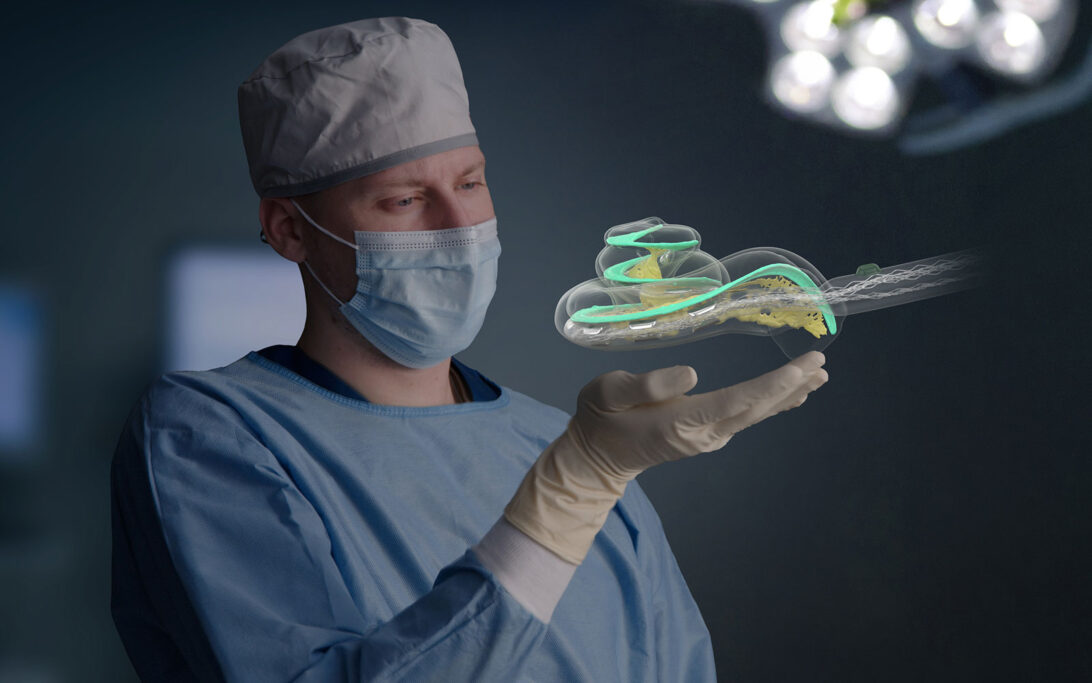
OTOGUIDE: A New Precision Surgery Tool for Individualized Cochlear Implantation
OTOGUIDE: Precision you can see. You know OTOPLAN,* OTODRIVE,** and OTOARM. And now there’s OTOGUIDE, our new intraoperative software that enables you to see electrode array insertion like never before.

How Cochlear Implant Recipients Benefit From Intelligent Parallel Stimulation
Since 2006, each channel or pair of electrodes in MED-EL’s cochlear implants has had its own current source. These 12 channels with independent current sources allow each electrode pair to stimulate the cochlea with more flexibility. For instance, several different electrode pairs can stimulate different places in the cochlea at precisely the same time, which is often referred to as simultaneous or parallel stimulation.

Behind the Research on Reaching Closest to Natural Hearing

Anatomy-Based Fitting: A New Tool for Improving Place-Pitch Match
Clinicians are just starting to discover the great potential of anatomy-based fitting, an approach to cochlear implant frequency mapping that only MED-EL offers as part of our fitting software, MAESTRO, which is available to clinicians. It is the next step forward in providing cochlear implant recipients closer to natural hearing. As a new feature introduced with the release of MAESTRO 9.0, anatomy-based fitting (ABF) allows you to align the frequency map stimulated by the CI to the natural place-pitch frequency map in the cochlea as best as possible.

Surgical Experience With FLEXSOFT Cochlear Implant Electrode Arrays: Dr. Sachin Gupta