



MED-EL
Published Apr 27, 2026
What Makes HearCare MED-EL So Exciting?
Today, we’re getting unique insights into using Remote Care in routine clinical practice—we’ll learn more about providing audiological care via the MAESTRO software and the HearCare MED-EL app, which can be done anytime, anywhere. Prof. Andreas Büchner describes firsthand how this pioneering technology is used at the DHZ (German Hearing Center) in Hanover, its benefits, and its implications for patients and clinical staff.
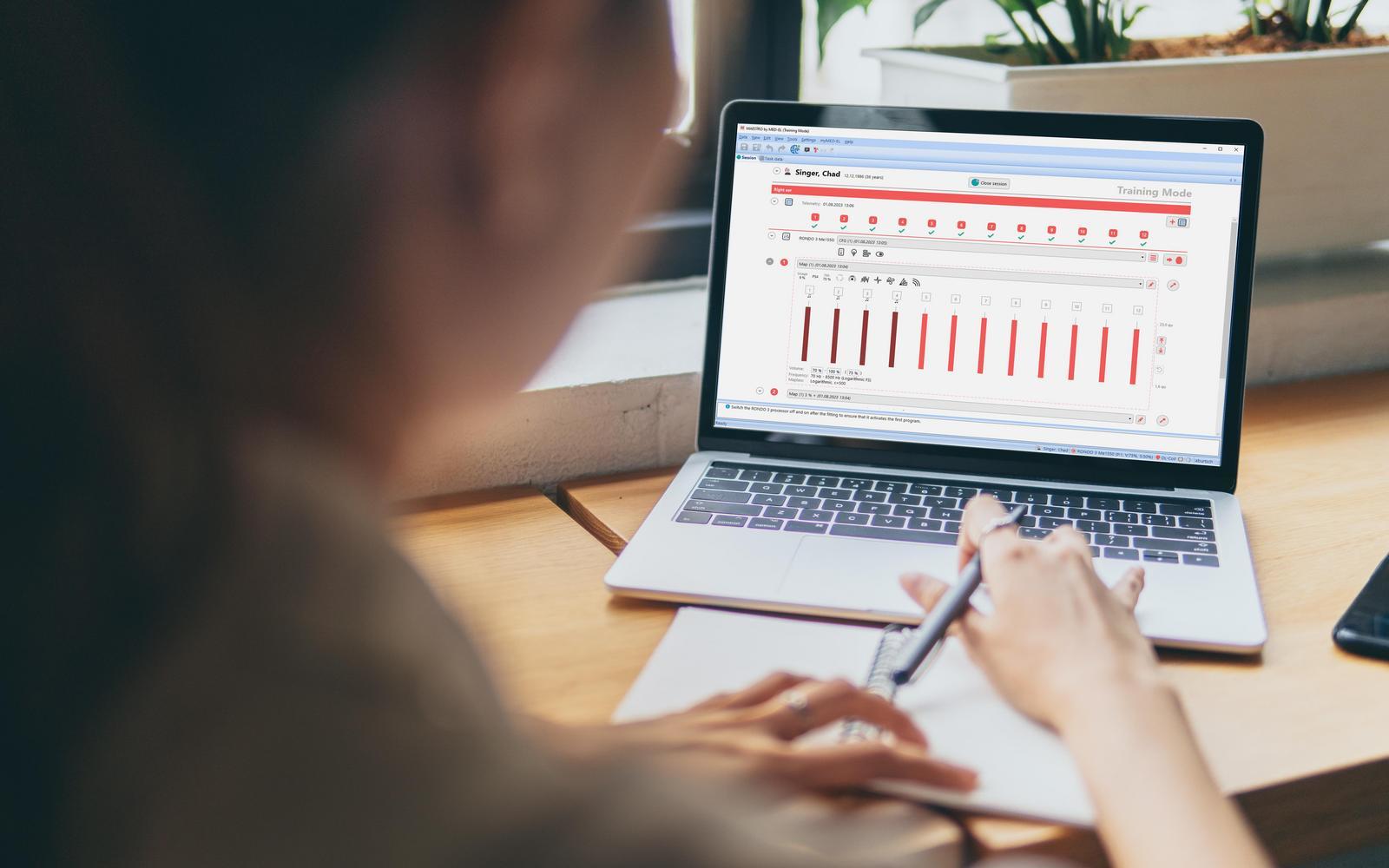
As Head of Research at the DHZ (German Hearing Center) at the Medical University of Hanover, Prof. Andreas Büchner was one of the first clinicians worldwide to use MED-EL Remote Care.
HearCare is app available to MED-EL cochlear implant users since 2024 that, among other practical functions, enables asynchronous fitting map adjustments. It’s compatible with RONDO 3, SONNET 2, and SONNET 3 audio processors, as well as all MED-EL cochlear implants dating back to 2004. You can find more detailed information about compatible smartphones here.
The goal of HearCare is to reduce in-person appointments and costs, to offer greater independence and security, and to resolve device-related hearing problems more quickly. That’s the theory—but what’s it like in practice? Prof. Büchner answers this question in detail in this guest article.
More Autonomy for Recipients and Reduced Burdens for Clinics
Digitalization has had a huge impact on many areas of the healthcare industry in recent years. With the remote care app HearCare, MED-EL offers an innovative solution that makes aftercare for CI users more efficient, flexible, and convenient.
The HearCare app is a milestone in increasing patient autonomy while reducing the burden on clinics. In other areas of medicine, it’s already common practice to actively involve patients in their own treatment—one example is continuous glucose monitoring in diabetes treatment, which enables patients to make precise lifestyle adjustments.
HearCare offers a similar opportunity for the first time by collecting objective measurements directly from the cochlea, such as impedance levels of the electrode contacts, via a smartphone, enabling early detection of abnormalities.
Flexible and Time-Saving
Until now, many CI users have often had to travel long distances for fitting adjustments and check-ups. That required not only a lot of time but also posed a challenge to people from rural areas or those with other health issues that make traveling difficult.
With HearCare, they can check the functionality of their cochlear implant system, install new fittings, and make quick impedance measurements from the comfort of their own home. That saves time: It makes it possible to provide patients with more individualized care, reduces wait times, and eliminates time-consuming travel.
When Is HearCare Used?
Generally speaking, we don’t have any restrictions on which patients we select—we offer this new option to everyone with a compatible smartphone. We highly recommend the app to patients with residual acoustic hearing.
Especially in the first three months after implantation, reactions to foreign bodies or microtrauma can lead to inflammatory processes, which can be detected by an increase in electrode impedance levels. With daily measurements via HearCare, we can identify these changes early and, if necessary, counteract them with appropriate medication. This is crucial to maintain residual hearing for the later provision of electric-acoustic stimulation (EAS).
Slight Adjustments to Fitting Maps
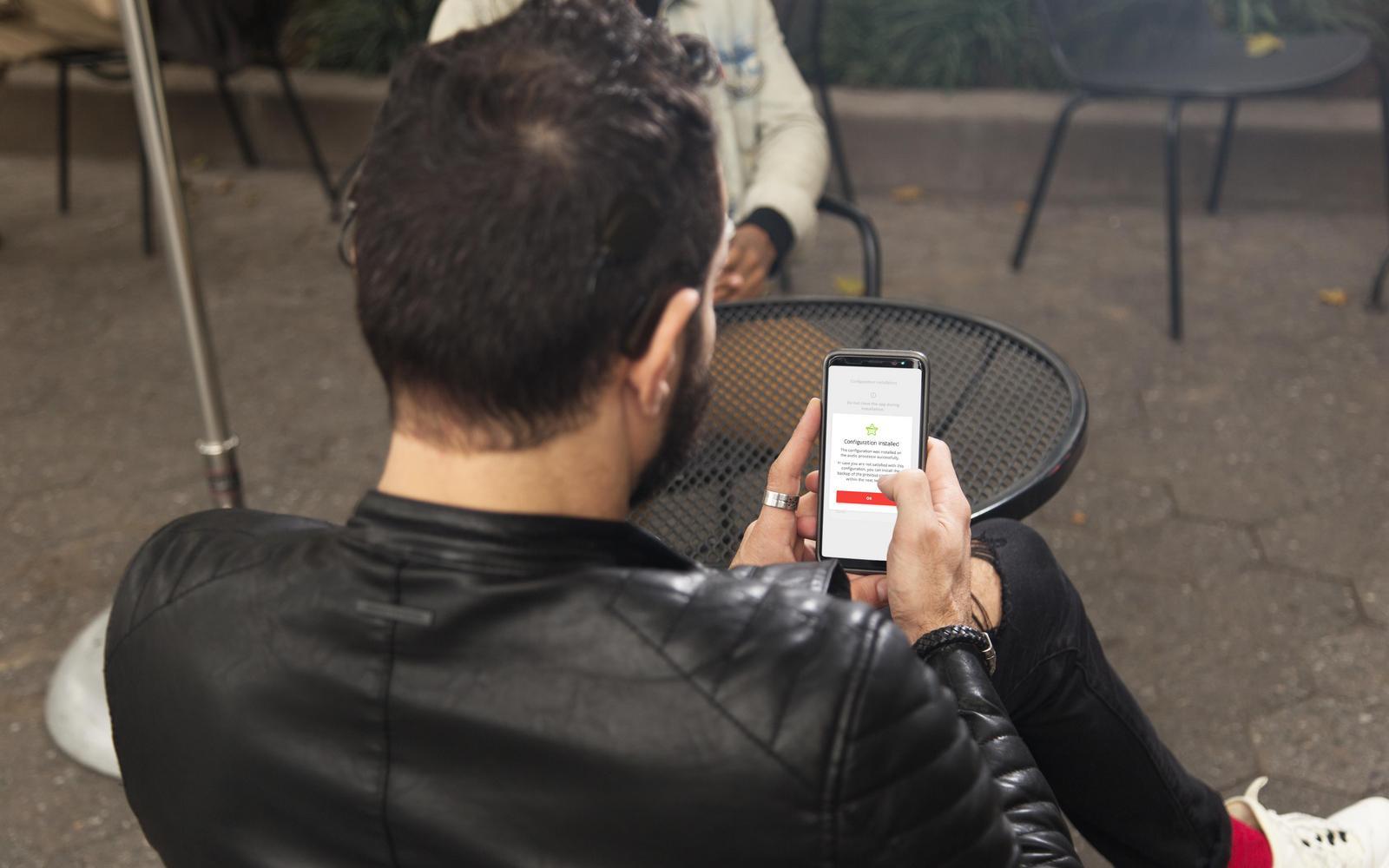
An especially practical feature is being able to send new fitting maps directly to patients. Listening situations are often dynamic and differ greatly from the conditions while doing fitting at the clinic.
Recently, a patient was having difficulties with a resounding church organ. With HearCare, we created an adjusted fitting with a reduction in the proportion of low-tone frequencies that she was able to test out immediately. After a slight adjustment, she was happy with the hearing results in her specific situation—without an additional appointment at our clinic.
System Checks and Configuration Backups
Another strength of HearCare is the ability for patients to check their cochlear implant systems regularly. System checks enable CI users to check the functionality of their audio processor and their implant. This function provides them with greater security and enables them to solve problems more quickly if abnormalities occur.
An example: A child with bilateral cochlear implants suddenly isn’t responding as well to speech. Instead of immediately going to the clinic, a system check in the HearCare app can indicate whether the microphone cover is dirty or if there is another technical issue.
Additionally, users can back up. If their processor gets damaged or lost, transferring the configuration to the replacement device is simple. This eliminates the need for a completely new fitting at the clinic, saving users valuable time.
My Summary: An Important, Future-Oriented Step
With the HearCare app, MED-EL is laying the foundation for revolutionizing cochlear implant hearing rehabilitation. The app offers not only more flexibility and comfort but also more sustainable and more individualized support for people with CIs—including by the patients themselves, who can use the app as a tool.
I’m convinced that patients with remote care solutions like HearCare will play a big role in shaping the future of CI treatment. The further development of these technologies will be decisive in further increasing the high level of care while also reducing the burden placed on clinics and audiologists.
Thank you for sharing with us your experiences with and impressions of Remote Care with HearCare MED-EL and MAESTRO, Prof. Büchner!
About Remote Care With MED-EL
The combination of the MAESTRO software and the HearCare MED-EL app makes an asynchronous exchange between the clinic and the user possible from anywhere. Practical remote care functions, such as transmitting data, sending and installing fittings, as well as saving and recovering audio processor configurations can be performed entirely without an appointment.
The app provides users with more independence and control. Minor fitting adjustments, as well as hearing interruptions caused by a technical defect or the loss of a processor, can be fixed quickly and easily thanks to HearCare. This reduces the burden on clinics and helps save time and reduce costs.
Asynchronous Audiological Fittings From Afar
With Remote Care, you can individually adjust listening programs and processor configurations at any time and send them to your patients. In MAESTRO, you can see all the necessary fitting parameters: processor settings, listening programs, audiogram data, and each patient’s backups and system check results.
This means you can support individuals who are on vacation, live far from the clinic, or have limited mobility—anytime and anywhere. Just adjust the configuration, send it to the CI user, and they decide when to download the configuration from the HearCare app and install it on their audio processor.
Audio Processor Backups in the Cloud
Sometimes an audio processor gets damaged or lost—and this can happen on the weekend or even when someone is on a trip to another country. For CI users, the idea of this happening is terrible. With HearCare, the entire audio processor configuration can be saved in the MED-EL cloud and, if necessary, installed on a replacement device immediately. And the patient can do this on their own without professional help or an appointment.
Cochlear Implant System Checks
CI users with the HearCare app can perform system checks on their smartphone to check the functionality of their CI system with the press of a button (implant check via impedance measurement, processor check via microphone transmission quality). If a problem is identified, the app provides solution suggestions in the form of easy-to-understand descriptions and symbols.
More Details
For medical professionals, we’ve written an article about the six most important features of HearCare MED-EL. In addition to information about Remote Care in the MAESTRO software, you can also download a practical guide there.
Interested in HearCare MED-EL?
Would you like to provide Remote Care via the MAESTRO software and the HearCare MED-EL app at your clinic? If you have any questions about this innovative solution, don’t hesitate to get in touch with your local MED-EL team!
Andreas Büchner, Prof. Dr. Dipl.-Inform.
Prof. Andreas Büchner is the Head of Research at the DHZ (German Hearing Center) at the Medical University of Hanover. Cochlear implants and their signal processing, stimulation patterns, and electrode arrays are at the center of his work, as well as questions regarding process optimization and cost coverage for the provision of hearing solutions.
This article has been translated from German.
Subscribe and Read More
Subscribe to the MED-EL Professionals Blog and receive interesting articles about MED-EL products, case studies, hearing implant surgeries, and rehabilitation materials sent directly to your inbox for free.
Subscribe NowReferences
MED-EL


Was this article helpful?
Thanks for your feedback.
Sign up for newsletter below for more.
Thanks for your feedback.
Please leave your message below.
CTA Form Success Message
Send us a message
Field is required
John Doe
Field is required
name@mail.com
Field is required
What do you think?
The content on this website is for general informational purposes only and should not be taken as medical advice. Please contact your doctor or hearing specialist to learn what type of hearing solution is suitable for your specific needs. Not all products, features, or indications shown are approved in all countries.
DAVE FASKEN
May 02, 2026
looking forward to be able to try hearcare app with Sunnybrook and eliminate need to travel long distance and avoid high traffic areas of Toronto
MED-EL
MED-EL
Conversation
1 Comment