English - United States
English - United States
 English - United States
Popular Topics:
Popular Topics:

Published May 21, 2026
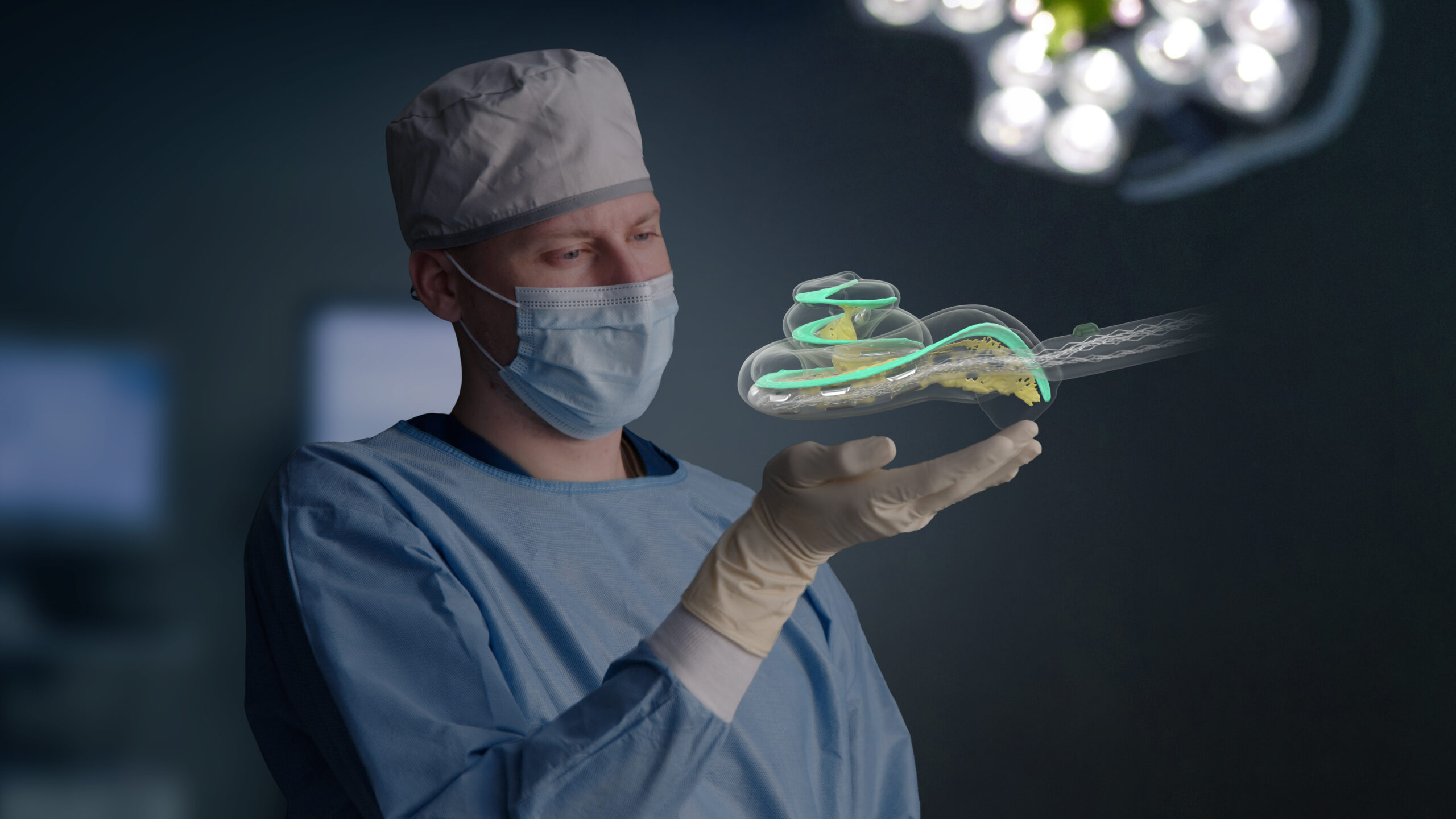
“The goalposts have moved[;] we've gone away from just hearing words, to actually giving people a complete hearing experience. And I don't think we can do that without stimulating the whole cochlea.”
Prof. Sumit Agrawal
There’s been a lot of discussion in recent years about the importance of considering individual anatomy when making cochlear implantation decisions. Marcus Schmidt, CMO of MED-EL, sat down with Professor Sumit Agrawal and Dr. Peter Nopp to discuss their research into the intricate structures of the cochlea and get their insight into some commonly held ideas about how this impacts achieving the closest to natural hearing.
Professor Agrawal mentions in the episode how the cochlea is tonotopically mapped, much like a piano. This means that at the base of the cochlea, we get the high frequencies. Then, at the top, or apex, of the cochlea, we get the low frequencies. Delicate structures inside the cochlea help convert the acoustic energy received into electrical signals, which are then interpreted as sound by the brain. It’s only by covering the entire length of the cochlea that a person can access all of those frequencies to experience the full range of sound.
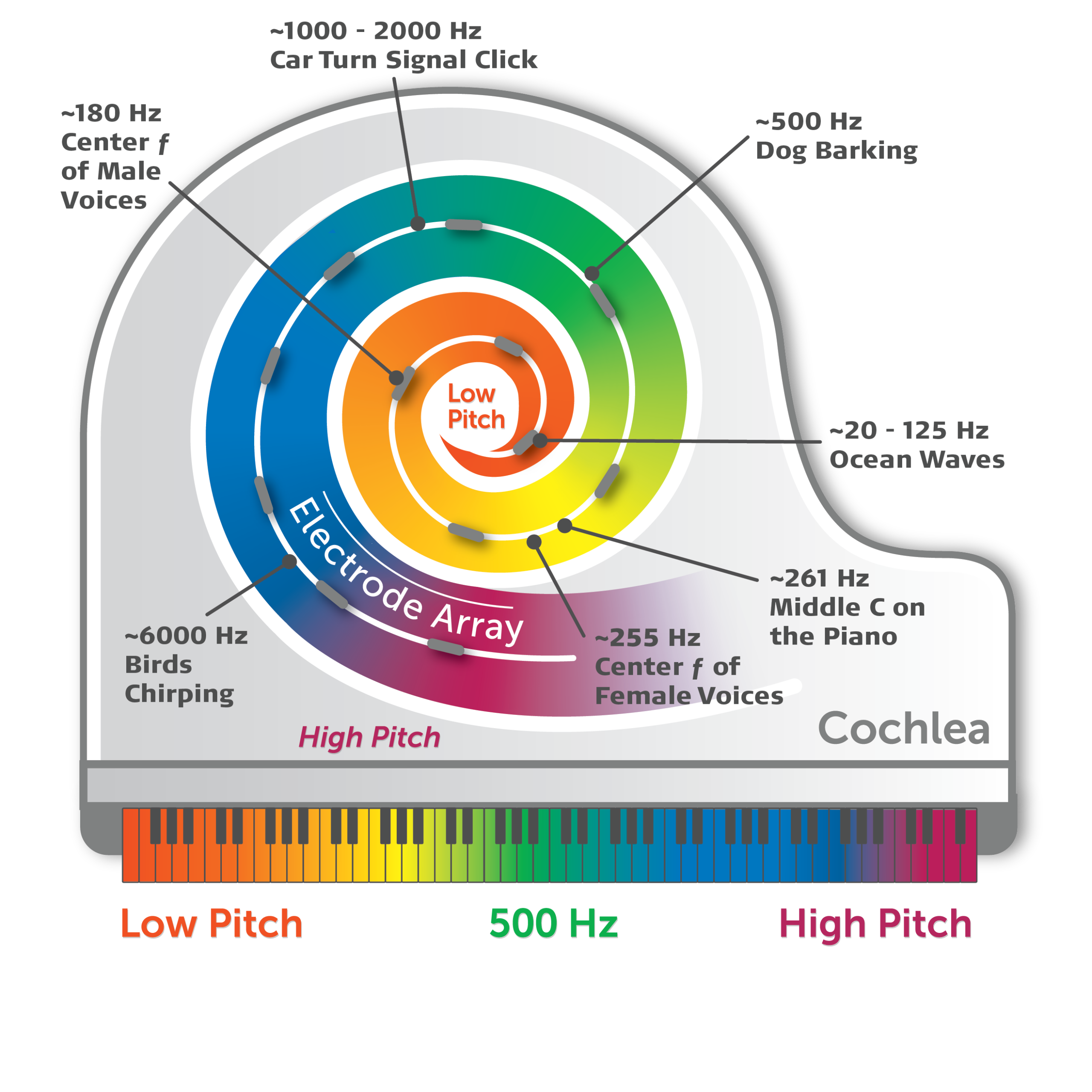
To achieve this, extending the implant’s electrode array into the second turn of the cochlea is imperative. This is significant for a variety of reasons. For starters, Professor Agrawal notes that “most of our patients typically have a little bit of preserved low frequency hearing, which is up in the apex.” Being unable to stimulate that deeper section of the cochlea could result in a patient missing out on the residual hearing they still have available. But Dr. Nopp goes even further to explain that “a short electrode […] doesn’t really spoil speech perception, but it heavily spoils music appreciation.” Without access to full cochlear coverage, the subtle aspects of hearing are lost: tone, music appreciation, emotion, etc. When MED-EL discusses the closest to natural hearing, we’re talking about much more than just basic communication.
“Natural hearing is not only about understanding words, but [it’s] also hearing these subtle things in speech, appreciating music, and hearing emotions.”
Curious to learn more about how cochlear anatomy can help provide your patients with greater personalized medical care? Check out this episode and the rest of our Closest to Natural Hearing podcast!
References
Was this article helpful?
Thanks for your feedback.
Sign up for newsletter below for more.
Thanks for your feedback.
Please leave your message below.
Thanks for your message. We will reply as soon as possible.
Send Us a Message
Field is required
John Doe
Field is required
name@mail.com
Field is required
What do you think?
© MED-EL Medical Electronics. All rights reserved. The content on this website is for general informational purposes only and should not be taken as medical advice. Contact your doctor or hearing specialist to learn what type of hearing solution suits your specific needs. Not all products, features, or indications are approved in all countries.
We’re the world’s leading hearing implant company, on a mission to help people with hearing loss experience the joy of sound.
Find your local MED-EL team
© MED-EL Medical Electronics. All rights reserved. The content on this website is for general informational purposes only and should not be taken as medical advice. Contact your doctor or hearing specialist to learn what type of hearing solution suits your specific needs. Not all products, features, or indications are approved in all countries.